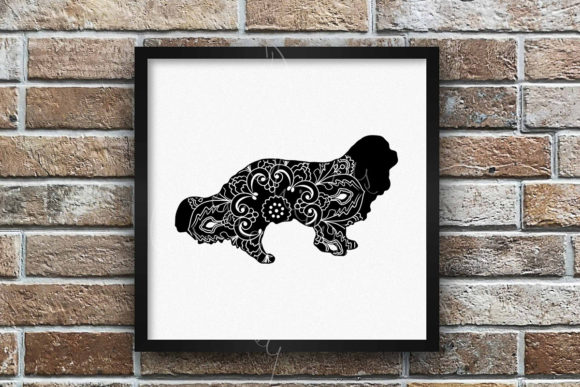
Cavalier King Charles Spaniel Mandala
A Designer’s First Look: Graceful, Detailed, and Deliberately Demanding
When I opened the Cavalier King Charles Spaniel Mandala, my first thought wasn’t “pretty”—it was “respect.” This isn’t a quick-stitch silhouette or a simplified vector for beginners. It’s a tightly composed embroidery file where every petal, swirl, and concentric ring lives inside the unmistakable profile of a Cavalier—ears soft, muzzle gentle, posture serene. The mandala doesn’t compete with the dog shape; it *breathes* from it. That balance makes it feel intentional, not decorative. I immediately pictured it on a linen tea towel for a boutique kitchen line—not as filler, but as a quiet centerpiece.
Where It Shines (and Where It Asks for Your Full Attention)
I tested the Cavalier King Charles Spaniel Mandala across three real projects: a cotton twill apron for a local bakery, a baby muslin blanket for a custom gift order, and a 5” embroidered patch sewn onto a denim tote. The results varied—not because the design failed, but because its intricacy demands context.
- Applique design? Not ideal. The fine linework and layered fill stitch areas don’t translate cleanly to raw-edge applique. Save this one for full-coverage machine embroidery design work.
- Tote bag design? Yes—if you’re using medium-weight canvas and a mid-size hoop. On the denim tote, the outer mandala rings held crisp definition, but inner details softened slightly on the seam curve. A light tear-away stabilizer + basting stitch helped immensely.
- Baby embroidery? Proceed with care. On the muslin blanket, the high stitch density created subtle stiffness in the chest area. For infant wear or swaddles, I’d recommend simplifying inner layers—or reserving it for non-contact items like nursery wall hangings or pillow covers.
Fabric & Function: What You’ll Need to Know Before Stitching
This isn’t a “throw-it-on-any-garment” embroidery file. Its strength is also its constraint: that intricate mandala means stitch density climbs quickly. On thin fabric like rayon challis or lightweight jersey, you’ll see shadowing or puckering without proper cut-away stabilizer—and even then, test stitching is non-negotiable. On dark fabric, thread color contrast becomes critical: pale golds or creams vanish unless you add an underlay or switch to matte-finish threads.
For curved surfaces—caps, beanies, or tapered pillow corners—the outermost mandala elements can distort if hooping tension isn’t perfectly even. I found best results on flat, stable substrates: tea towels, cotton pillow covers, linen napkins, and structured sweatshirt embroidery (think left-chest placement on a heavyweight fleece). Avoid stretchy fabric unless you’re pairing it with adhesive-backed stabilizer and reducing stitch speed.
Real Impact on Your Craft Business
As an Etsy seller and small shop product developer, I judge designs not just by beauty—but by how they affect buyer trust and perceived value. The Cavalier King Charles Spaniel Mandala reads as premium. Customers recognize hand-drawn precision—even when it’s digital. When used well, it elevates a simple tote bag into a personalized gift. It signals care, not convenience. That matters for holiday embroidery, wedding gifts (imagine it stitched on a bridesmaid’s robe), or boutique branding where consistency and quiet elegance define your voice.
But here’s what I tell every craft business owner: this design doesn’t hide flaws. If your thread tension is off, the satin stitch edges will show. If your hoop slips mid-stitch, the symmetry breaks visibly. That means it rewards skill—and raises expectations. That’s good for long-term credibility, but risky for time-sensitive client work unless you’ve pre-tested thoroughly.
Practical Embroidery Designer Notes (No Guesswork Allowed)
Before you load the Cavalier King Charles Spaniel Mandala into your machine or list it in your digital embroidery file shop:
- Run a test on scrap fabric matching your final substrate—especially if using textured fabric like terry cloth or bouclé.
- Check thread color contrast in both natural and artificial light. A design this detailed needs legibility at arm’s length.
- Review stitch density visually in your editing software. Dense fill stitch in tight rings may require slower machine speeds or reduced density for delicate fabrics.
- Confirm hoop size compatibility. Don’t assume it fits a 4×4—some mandala variants extend beyond standard small hoops.
- Inspect tiny details: the innermost circles, ear contours, and negative space between petals. Can your machine resolve them cleanly?
- Test black-and-white mockups. Does the design retain clarity without color cues?
- Compare performance on light vs. dark fabric backgrounds. Adjust underlay or thread choice accordingly.
- Use proper stabilizer—cut-away for knits, tear-away for wovens, and fusible for lightweight home decor crafts.
- Verify licensing before selling finished products or bundling the file in digital product previews. This is a graphics asset meant for commercial embroidery, but terms vary by seller.
Final Thought: A Design That Earns Its Place
The Cavalier King Charles Spaniel Mandala isn’t background noise. It’s a statement piece—one that works best when you let it anchor a project rather than compete within it. It suits makers who value intention over speed, detail over duplication, and emotional resonance over trend-chasing. Whether you’re crafting personalized gifts, building a cohesive Etsy shop, or developing signature embroidery project kits, this design asks for thoughtful application—and rewards it with quiet distinction. Just remember: its beauty lies not just in the lines, but in how respectfully you steward them.