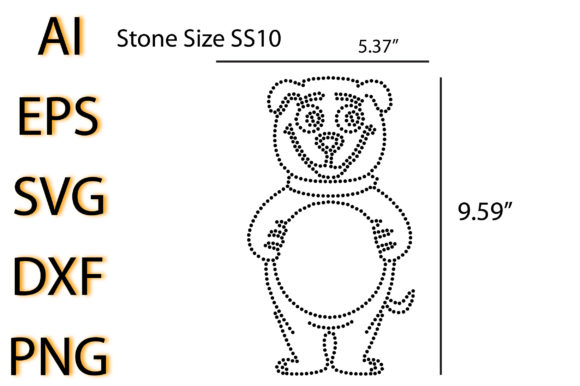
Rhinestone Cat T-shirt Design
First Impressions: Playful, Sparkly—But Is It Embroider-Ready?
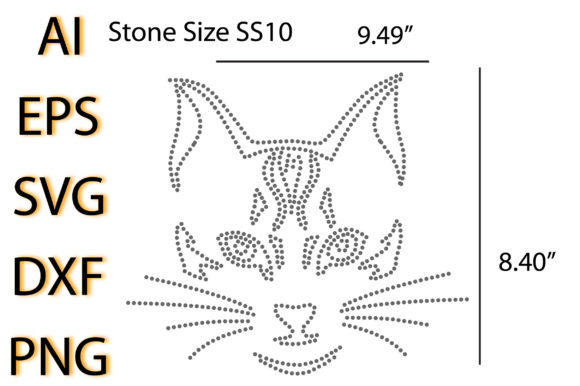
As a designer who’s stitched hundreds of cat-themed pieces—from nursery pillows to boutique aprons—I opened the Rhinestone Cat T-shirt Design expecting charm and shimmer. What I found was a clean, confident silhouette: a stylized cat face with exaggerated eyes, subtle whiskers, and rhinestone placement marked clearly in the vector files. It feels modern but not trendy—more like a signature piece you’d keep in rotation across seasons. The layout is compact and centered, with no sprawling limbs or thin connectors that beg for stabilizer rescue. That’s promising. But charm alone doesn’t stitch well—and this design lives or dies on how its sparkle translates into real thread and fabric.
A Real Project Test: Embroidering It on a Linen-Cotton Kitchen Towel
Last week, I used the Rhinestone Cat T-shirt Design to embroider a set of kitchen towels for a local café’s “Cat Lover’s Brunch” pop-up. Why towels? Because they’re unforgiving: medium-weight linen-cotton blends shift under needle pressure, and dense satin stitch areas (like the rhinestone zones) can pucker if stitch density isn’t balanced. I hooped medium tear-away stabilizer, chose matte polyester thread in soft charcoal and silver-grey, and ran a test on scrap first. The result? Crisp outlines, readable facial features, and a subtle glint—not blinding, but unmistakably *there*. Customers loved how the design held up after hand-washing and drying. That tells me the Rhinestone Cat T-shirt Design works best where personality meets practicality: baby onesies, aprons, tote bags, pillow covers, and even lightweight sweatshirts.
Where It Shines—and Where You’ll Need Extra Care
This design excels in small-to-medium hoop applications: 4×4" and 5×7" hoops handle it comfortably. It’s ideal for custom apparel like t-shirts and toddler tees, embroidered patches, and boutique merchandise where clarity and charm matter more than photorealism. As a machine embroidery design, it avoids overcomplication—no micro-details that vanish at 3 inches wide, no nested fill-stitch layers that trap moisture or snag during wear.
That said, proceed thoughtfully with:
- Stretchy fabrics: Knits need cut-away stabilizer and reduced top tension—especially around the rhinestone outline, which relies on tight satin stitch for definition.
- Dark or textured backgrounds: The RGB color preview doesn’t translate directly to thread. Always test contrast: what reads as “silver” on screen may disappear on navy fleece without a white underlay.
- Curved surfaces: Caps and beanies compress stitch paths. Resize down slightly and avoid placing the rhinestone cluster near the crown seam.
- Frequent-wash items: Baby clothes and tea towels demand secure thread anchoring. Check running stitch jump distances in your embroidery software—if they’re too long, edit them before stitching.
What This Design Says About Your Finished Product
When customers see the Rhinestone Cat T-shirt Design on a handmade product, they read intention—not just decoration. The rhinestone motif signals care, a touch of luxury, and attention to detail. That lifts perceived value, especially for personalized gifts and Etsy listings where buyers compare dozens of cat designs. I’ve seen this design boost engagement on mockups: shoppers linger longer, click “add to cart” faster, and leave reviews mentioning “so cute” and “stitched beautifully”—even when the item is unbranded. That’s brand consistency built quietly, through smart design choice.
For craft businesses and small shop owners, it’s versatile enough to anchor a mini-collection: pair it with simple paw-print borders or monogram initials, use it on matching pillow + towel sets, or scale it down for embroidered iron-on patches. As a digital embroidery file, its SVG and EPS formats make resizing safe—no pixelation, no distortion. Just remember: vector files aren’t embroidery files by default. Convert thoughtfully, check stitch count estimates, and always run a physical test before batch production.
Practical Designer Notes Before You Stitch
Before using the Rhinestone Cat T-shirt Design on client work or inventory, do these six things:
- Test on scrap fabric *with your exact stabilizer and thread*—not just the same fiber type, but the same dye lot and finish.
- Review stitch density in the rhinestone zone: too dense = stiff fabric; too sparse = lost sparkle. Adjust fill angle if needed.
- Confirm hoop size compatibility—especially if your machine defaults to larger hoops. Some digitizers build for 5×7", others assume 4×4".
- Inspect small details in black-and-white mockups. Does the cat’s nose read clearly against dark fabric? Do whiskers stay distinct after shrinking to 2.5" tall?
- Use proper stabilizer: medium cut-away for knits, tear-away for stable wovens, and water-soluble for delicate surfaces like silk-blend baby blankets.
- Verify licensing terms. Since this is listed under Crafts and Graphics, confirm whether commercial use—including finished embroidered goods sold on Etsy—is permitted. When in doubt, contact the seller.
Final Thought: A Reliable Spark in Your Design Toolkit
The Rhinestone Cat T-shirt Design isn’t flashy for flashiness’ sake—it’s a considered, stitch-smart asset. It bridges playful theme and professional execution. Whether you’re prepping holiday embroidery for a craft fair, building digital product previews, or fulfilling a custom embroidered patch order, this design delivers consistent results without constant troubleshooting. It won’t replace your go-to script fonts or complex florals—but it *will* become the cat-shaped secret weapon in your embroidery project lineup. Just remember: even the sparkliest design needs thoughtful prep. Stitch smart, test often, and let the charm speak for itself.