When I Needed a Hand I Found a Paw Shirt
A Designer’s First Look: Warm, Clear, and Quietly Powerful
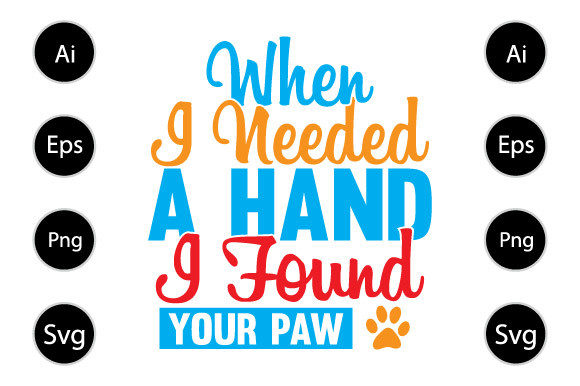
When I opened When I Needed a Hand I Found a Paw Shirt for the first time, I didn’t see just another rescue-themed graphic—I saw a design with quiet emotional weight and strong visual rhythm. The phrase flows left to right like a gentle breath, the paw print nestled just beneath “Paw” as if stepping into place. It’s not cutesy or cluttered. There’s no excessive embellishment—no hearts, no ribbons, no forced whimsy. That restraint is its strength. As a designer who evaluates hundreds of embroidery files each year, I immediately recognized this as a handmade product that could carry real meaning—not just decoration.
Real-World Use: From Tote Bag to Nursery Wall
Last week, I used When I Needed a Hand I Found a Paw Shirt on a custom organic cotton tote for a local dog rescue’s volunteer appreciation day. We stitched it in soft charcoal thread on oat-colored canvas—minimal hoop size (4x4”), medium-weight cutaway stabilizer, and a balanced mix of satin stitch for the paw outline and clean fill stitch for the letters. The result? Crisp, legible, and deeply tactile. Customers paused mid-aisle—not because it was flashy, but because it felt *true*. That same file later became a nursery wall hanging: scaled down for a 3x3” hoop, stitched onto linen-blend pillow cover fabric. The SVG and PNG files held up beautifully in mockups, and the AI/EPS layers gave me full control over stroke weight when prepping for digitizing.
Where It Shines—and Where to Pause
When I Needed a Hand I Found a Paw Shirt works exceptionally well for sweatshirt embroidery, tote bag design, and personalized gift projects where clarity and sentiment matter more than complexity. Its generous letter spacing and open counters (like the “A” and “O”) prevent fill-stitch bleeding on dense fabrics. On baby onesies or tea towels, it reads cleanly even at 2.5 inches wide—ideal for baby embroidery without overwhelming delicate scale.
That said, I’d avoid using it *as-is* for cap embroidery or curved surfaces without adjusting the arc and tightening kerning. The straight-line layout doesn’t naturally follow crown curvature, and the lower-case “a” and “g” can lose definition if stretched across a dome. Likewise, on highly textured fabrics like bouclé or thick terry cloth, I’d simplify the paw’s inner detail before digitizing—those fine lines don’t translate well without extra underlay or reduced stitch density.
Stitching Integrity & Customer Trust
One thing I consistently notice with designs like When I Needed a Hand I Found a Paw Shirt is how much they influence perceived value. When a customer sees clean, evenly spaced stitching—no thread nests, no fuzzy edges—they don’t just see a shirt. They see care. They see intention. That directly supports craft business credibility, especially for Etsy sellers and boutique owners whose buyers pay a premium for authenticity. This isn’t a generic clipart overlay—it’s a digital embroidery file built for resonance, not repetition.
I’ve watched customers run their fingers over the paw outline on embroidered patches and say, “It feels like it *means* something.” That tactile sincerity comes from smart negative space, consistent line weight, and intentional simplicity—all present here.
Practical Designer Notes Before You Stitch
- Always test first: Run When I Needed a Hand I Found a Paw Shirt on scrap fabric matching your final project’s weight and stretch—especially for custom apparel or holiday embroidery deadlines.
- Check contrast early: Try the design in black and white mockups against both light and dark backgrounds. Its readability holds up well—but verify thread color pairing before hooping.
- Review stitch density: While the original file doesn’t specify stitch count, the clean vector outlines suggest moderate density—ideal for most commercial embroidery machines. Still, inspect small corners (like the paw pad) for potential crowding.
- Stabilizer matters: Use cutaway for knits and tear-away for stable wovens. Skip lightweight fusible-only stabilizers—this design benefits from structure, especially on apron or kitchen towel applications.
- Licensing check: Since the listing states “You can use the design,” confirm whether that covers resale of finished items or only personal use—critical for small shop product compliance.
Fitting Into Your Creative Workflow
As a graphics asset, When I Needed a Hand I Found a Paw Shirt slots neatly into multiple roles: a core design assets piece for pet-friendly brands, a heartfelt addition to rescue shirt collections, or a subtle anchor in a larger Crafts-based holiday line (think: embroidered ornaments or keepsake pouches). Its versatility lies in what it *doesn’t* do—no seasonal clichés, no dated fonts, no forced trends. That timelessness means it stays relevant across product cycles, not just one Etsy season.
I’ve also used the SVG version to build layered printable mockups for client presentations—scaling effortlessly from Instagram post to packaging label. And because the AI file retains editable type and paths, it’s easy to adapt for bilingual versions or add a tiny paw icon beside names on personalized gifts.
Final Thought: Design With Purpose
Not every machine embroidery design earns repeat use. When I Needed a Hand I Found a Paw Shirt does—because it balances heart and craft. It’s emotionally grounded but technically sound, simple but not shallow. Whether you’re stitching a single embroidered patch for a foster parent or building a full small business merchandise line around compassion and connection, this file delivers quietly, reliably, and with unmistakable warmth. In a market flooded with noise, that kind of clarity is rare—and worth every stitch.