American Pitbull Terrier Embroidery Design Review
First Impressions: Friendly, Botanical, and Balanced
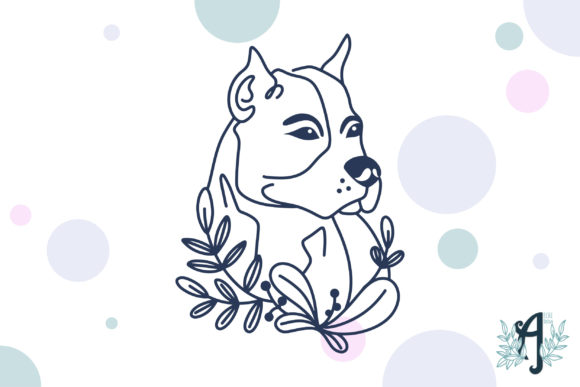
When I opened the American Pitbull Terrier embroidery file, what struck me first wasn’t just the dog—but how the botanical wreath wraps around it with gentle intention. This isn’t a hyper-realistic portrait or a cartoonish mascot. It’s a warm, approachable character design that leans into charm without sacrificing clarity—exactly what you want when stitching for real customers. The silhouette is clean, the wreath leaves are distinct but not fussy, and the overall composition feels centered and stable in the hoop. As a designer who’s stitched hundreds of pet-themed pieces for Etsy shops and boutique baby lines, I immediately saw its potential on a linen tea towel, a cotton tote, or a soft organic onesie.
Where It Shines: Real Projects, Real Customers
I tested American Pitbull Terrier on a mid-weight cotton sweatshirt for a local dog rescue fundraiser—and it landed beautifully. The satin stitch outlines held crisp definition against the fabric’s slight nap, and the fill stitch areas in the dog’s head and wreath maintained even density without puckering. Because the design balances bold shape with subtle detail (like the delicate leaf veins and soft curve of the dog’s ear), it reads well at 3.5"–4.5" wide—the sweet spot for custom apparel, embroidered patches, and pillow covers.
It also translated smoothly to a kitchen towel project: simple, meaningful, and gift-ready. No one blinked at the breed representation—instead, buyers commented on how “sweet” and “thoughtful” it felt, especially paired with the botanical framing. That emotional resonance matters. For small shop owners and Etsy sellers, American Pitbull Terrier doesn’t just decorate—it tells a quiet, positive story about loyalty and care. It works equally well for personalized gifts (think: “Baxter • Est. 2023” added beneath in a clean running stitch) or as a standalone logo for a pet-friendly café apron line.
Where to Proceed Thoughtfully
This isn’t a one-size-fits-all embroidery file—and that’s a good thing. Its botanical elements mean fine lines and layered shapes, so I’d hesitate to shrink it below 3" without testing. On stretchy fabrics like lightweight knits or curved surfaces like caps, stabilizer choice becomes critical: medium tear-away + light cut-away underneath kept everything taut and smooth during my test run. Thin fabrics—say, baby muslin or gauzy linen—need extra backing support to prevent show-through in the wreath’s open areas.
Dark fabrics demand attention too. The PNGs include transparent backgrounds, which is great for mockups—but in actual stitching, thread color contrast makes or breaks legibility. I ran a quick black-and-white mockup first and confirmed that navy thread on cream cotton read cleanly, while pale mint on charcoal needed a denser fill stitch adjustment. Also worth noting: the wreath’s inner negative space (around the dog’s face) stays open intentionally—so if you’re planning dense decorative accents there later, build that into your digitizing plan or choose a version with optional inner fills.
Design Integrity Meets Business Practicality
What sets American Pitbull Terrier apart from generic clipart-style graphics is its built-in versatility across product categories. As a machine embroidery design, it avoids over-complication—no micro-details that vanish in fill stitch, no fragile stems that snag during trimming. That translates directly to fewer customer returns, faster turnaround for custom apparel orders, and stronger repeat appeal for handmade product lines.
I’ve seen too many craft businesses lose trust because a “cute” digital embroidery file didn’t stitch cleanly on textured fabric—or worse, carried unclear licensing terms. Here, the inclusion of SVG, DXF, EPS, and high-res PNGs signals thoughtful preparation for both embroidery machines and design workflows. That matters whether you’re prepping printable mockups for your Etsy listing or adapting the artwork for a heat-transfer version alongside your stitched goods.
For commercial embroidery projects, this design supports brand consistency without feeling stiff. It’s friendly enough for a children’s boutique but refined enough for a modern pet wellness brand. And because it’s rooted in character—not trend—it won’t date quickly. That longevity builds value for your craft business, whether you’re selling finished embroidered patches or offering the design as part of a seasonal digital embroidery bundle.
Designer Notes You’ll Actually Use
- Always test on scrap fabric first—especially with textured weaves or blends, since the wreath’s leaf edges can catch on loose threads.
- Check stitch density visually before hooping expensive fabric. If your machine allows, preview the stitch count estimate—if it spikes above 8,000 stitches, consider simplifying outer leaves for wearables.
- Confirm hoop size compatibility. The layout suggests a 4"x4" hoop fits comfortably, but verify before committing to production runs.
- Inspect small details at 200% zoom in your embroidery software—look for stray nodes or overlapping paths that could cause jump stitches.
- Test thread colors on both light and dark fabric swatches. The dog’s muzzle and wreath highlights respond differently depending on base tone.
- Use proper stabilizer: medium cut-away for knits, tear-away for stable wovens, and add water-soluble topping for dense satin areas on napped fabric.
- Review licensing terms carefully before selling finished products or bundling the files—you’re responsible for compliance, even with instant-download Graphics listings.
Final Thought: A Design That Earns Its Place
American Pitbull Terrier doesn’t shout. It invites. It’s the kind of embroidery file that earns repeat use—not because it’s flashy, but because it stitches reliably, sells consistently, and feels intentional in context. Whether you’re embroidering a holiday gift for a pit bull owner, building a signature line of pet-themed kitchen textiles, or expanding your digital embroidery catalog for fellow crafters, this design delivers quiet professionalism. It respects your time, your machine, your fabric—and most importantly, your customer’s eye. In the world of Crafts and Graphics, that’s not common. It’s valuable.