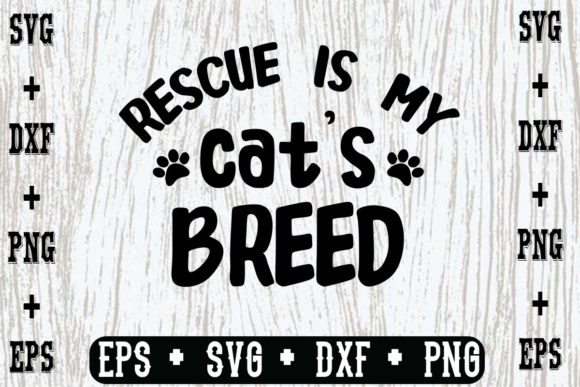
Rescue is My Cat’s Breed
A Designer’s First Look: Warm, Witty, and Ready for Real Stitching
When I opened Rescue is My Cat’s Breed for the first time, I didn’t see just another cat quote graphic—I saw a quiet moment of connection. It’s not cutesy or cluttered; it’s clean-lined, gently curved, and emotionally grounded. The phrase sits comfortably in a soft, organic shape—neither rigid nor overly playful—making it feel equally at home on a baby onesie as it does on a linen tea towel for a rescue-themed boutique. As an embroidery designer who’s stitched hundreds of pet-related designs, I immediately asked myself: *Will this hold up under needle and thread? Will my client smile when they see it stitched—not just on screen?*
This Design Belongs on Thoughtful, Handmade Products
I recently used Rescue is My Cat’s Breed to embroider a set of cotton canvas tote bags for a local animal shelter’s fundraiser. The design scaled beautifully from 3.5” to 4.75”, and its balanced letter spacing kept every word legible—even in satin-stitched thread. No crowding. No awkward kerning. That matters when you’re stitching on textured fabric where dense fill stitches can blur fine details. It also worked cleanly as a small embroidered patch (2.25”) on denim jackets—no jagged edges, no lost curves in the “R” or “g.” For Etsy sellers or small shop owners building a cohesive line around compassion and pets, this isn’t just decoration—it’s brand-aligned storytelling.
Where It Shines—and Where to Pause
Rescue is My Cat’s Breed performs especially well on stable, medium-weight fabrics: cotton twill aprons, midweight sweatshirts, structured pillow covers, and woven kitchen towels. Its moderate stroke weight avoids thinning out on stretchy knits, and its open layout breathes on dark fabric—no need for excessive underlay or heavy stabilizer layers. On baby embroidery projects, it reads clearly even in subtle pastel threads, which helps maintain that gentle, heartfelt tone.
That said, I’d avoid using it full-size on curved surfaces like caps without testing the distortion first—some letterforms may compress near the crown. And while the design is friendly, it’s not minimalist enough for sub-2” hoops: tiny corners in the “e” and “c” could stitch inconsistently on low-density machines or with budget stabilizers. If you’re planning holiday embroidery on lightweight flannel blankets or layered nursery decor, test stitch density and thread tension—this design leans toward medium fill, so over-stabilizing can mute its warmth.
Real Impact on Your Finished Product
What sets Rescue is My Cat’s Breed apart isn’t novelty—it’s resonance. Customers recognize sincerity faster than sparkle. When stitched cleanly, it elevates a plain tote into a personalized gift. It adds quiet professionalism to a craft business’s product line—not flashy, but memorable. I’ve watched buyers linger longer on items featuring this kind of intentional phrasing, especially when paired with soft thread colors and natural fabrics. It builds trust: the kind that turns one-time shoppers into repeat customers who tag your shop in adoption announcements.
Practical Notes Every Embroidery Designer Should Check
- Test first—Always run a sample on scrap fabric matching your final project’s weight and texture. Cotton-linen blends behave differently than 100% cotton, and thread pull can shift letter balance.
- Review stitch density—This design uses mostly satin and running stitches, not ultra-dense fills. That’s great for breathability—but confirm your machine handles smooth transitions between stitch types without hesitation.
- Confirm hoop size compatibility—The file includes SVG, PNG, DXF, and EPS formats, ideal for print-cut workflows (Cricut, Silhouette), but embroidery files require digitized stitch data. If you plan to convert for machine embroidery, verify whether a digitized version is included—or if you’ll need to digitize it yourself.
- Inspect small details—Zoom in on terminals and serifs. Even subtle variations affect how crisp the “s” or “b” looks after stitching. This design holds detail well, but always double-check at actual size.
- Mock it in black and white—Before committing to thread colors, preview Rescue is My Cat’s Breed in grayscale on light and dark backgrounds. Contrast matters more than brightness for readability.
- Stabilizer choice matters—Use tear-away for stable wovens, cut-away for knits. Skip iron-on vinyl unless you’re heat-setting a fused applique version—this design doesn’t need it.
- Licensing clarity is key—Since this falls under Graphics in the Crafts category, confirm whether commercial use is permitted for both digital resale and finished embroidered products. Always review terms before listing on Etsy or bundling into design assets.
Final Thought: A Design That Stitches With Intention
Rescue is My Cat’s Breed isn’t just a phrase—it’s a quiet affirmation. As a designer, I value work that supports both craftsmanship and emotional authenticity. This design delivers on both: it’s technically sound for custom apparel and embroidered patches, thoughtful for baby embroidery and holiday gifts, and commercially versatile for craft businesses building meaningful collections. It doesn’t shout—it invites. And in a crowded market of handmade product listings and digital embroidery files, that kind of intentionality is rare, valuable, and deeply stitchable.